Wednesday, 4 February 2009

February 2, 2008

Polusmiak, Berman-Järvi Share "New Beginnings" at NKU

Mary Ellyn Hutton
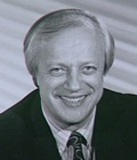

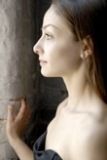
polusmiak_2.jpgSergei PolusmiakTatiana-0158_1.jpgTatiana Berman-Jarvi

What do you get when you put Russian and Ukrainian musicians together onstage?  Energy problems? (Analogy to the clash between the two countries over energy policy shamelessly intended.)
Quite the contrary, there was musical energy to spare Friday evening in Northern Kentucky University’s Greaves Concert Hall.
The occasion was NKU’s “New Beginnings,” a chamber music series featuring distinguished artist-in-residence Sergei Polusmiak and guests.  Polusmiak, a native of Kharkiv, Ukraine, welcomed Russian born violinist Tatiana Berman-Järvi -- neither was fazed by the Arctic weather outside -- for a program aptly described as a “mixture of French beauty and Russian power.”
“French beauty” referred to three Gallic works, Olivier Messiaen’s 1932 Theme and Variations for Violin and Piano, Sonata for Violin and Piano by Debussy and Sonata in A Major for Violin and Piano by Cesar Franck. 
 The “Russian power” denoted Rachmaninoff’s muscular Piano Sonata No. 2 in B-flat Minor, Op. 36, as well as power of a subtler sort, Tchaikovsky’s lovely “Meditation,” Op. 42, No. 1, for Violin and Piano.
 Polusmiak, “Honored Artist of Ukraine,” who immigrated to the U.S. in 1998, is a cogent example of the great tradition of piano playing exemplified by Vladimir Horowitz and his sister Regina, with whom Polusmiak studied in Ukraine.
   Berman-Järvi has been putting audiences on notice since coming to Cincinnati in 2004 (she is married to Cincinnati Symphony music director Paavo Järvi) that she is an exceptional artist who concedes nothing to today’s top-ranking fiddlers.  A product of the Yehudi Menuhin School in England and London's Royal College of Music, she displays her violinistic pedigree in everything she does. 
   She opened with the Messiaen, a work of mystical embodiment in the manner of his well known “Quartet for the End of Time” (performed by Berman-Järvi and members of the chamber group Concert:Nova at Cincinnati’s Christ Church Cathedral in December).
    Berman-Järvi possesses a distinctive tone – ineffably sweet, with a rapid, precise vibrato that she applies with exquisite musicianship.  Even the most intense moments never veer into excess or self-indulgence, but serve the music. (Three-quarters of a violinist’s tone, is a product of the player, not the instrument --  Berman-Järvi plays on an 1840 violin by British violin maker William E. Hill.)  
   These gifts, allied to technique in spades, served her and the music well in the Messiaen, where she soared above pealing chords by Polusmiak in the final variation, in the Tchaikovsky “Meditation,” which she capped with a silvery, stratospheric, high D, and, indeed, throughout the concert.
   Polusmiak can be a volcanic pianist and he was in the Rachmaninoff Sonata No. 2, a work which lends itself to such playing.  In three movements, the last two played without pause, the music is often turbulent, even angry, with volleys of notes pouring from the keyboard.  At such moments, Polusmiak seemed to have all 88 keys in his hands, helpless to do anything but his bidding, aided by effective, liberal pedaling. 
   The second movement was gentle and quasi-rhapsodic, the final movement tumultuous in the extreme, drawing an instant standing ovation from the crowd.  Obviously immersed in his playing and the excitement of the moment, Polusmiak waved from the wings rather than returning to center stage to acknowledge the applause (perhaps needing to retreat for de-compression).
   The two violin/piano sonatas followed after intermission.  Debussy’s Sonata, composed in the shadow of World War II, had a sometimes wistful, fluid elegance, from the Berman-Järvi's soft, opening statement to the playful second movement and the brisk finale.  
   Franck’s A Major Sonata made a sterling finish to the recital (Franck composed it for Belgian violinist Eugene Ysaye, music director of the CSO from 1918-22).  Collaboration by the two artists was superb here, Berman-Järvi applying her bow expertly and judiciously for a big, lustrous sound which she could plateau easily to match Polusmiak’s.  Twice they shaped the Sonata’s cyclical opening theme to a blossoming climax.
   Beginning with ominous rumblings in the piano, the second movement grew impetuous and wonderfully expressive.  The violin/piano dialogue in the third movement was touching, powerful and evenly matched, setting a serious mood that melted charmingly in the finale.  Here they took off after one another in high good humor (it is structured imitatively), working up to an exuberant ending and earning another standing ovation. 


February 3, 2009

Concert::Nova Does It in the Dark

Mary Ellyn Hutton

concertnovaenq_1.jpg
Concert:Nova
There were no hallucinations at Monday evening’s “Concert in the Dark” at the Contemporary Arts Center.
   For that, the chamber group Concert:Nova may need to perform in Mammoth Cave or nearby Carter Caves in Kentucky.  There it is possible – and routinely done as part of visits to the caves -- to extinguish all light and be in profound darkness.  (It is well recognized that deprivation of one sense, such as sight or hearing, tends to sharpen the others.)
  Still, the performance in the CAC’s “black box” Performance Space gave its listeners an idea of what that experience might be like. Cincinnati neuro-scientist Christopher Brubaker enlightened the audience with a lecture on music and the brain, which he interspersed among the five works on the program.
   They were:  Handel/Halvorsen’s Passacaglia for Violin and Viola; Bach’s Brandenburg Concerto No. 4; Charles Koechlin’s Sonata for Two Flutes, Op. 75; “Fratres” for String Quartet by Arvo Pärt; and “Last Round” by Osvaldo Golijov.
   C:N performers included violinist/violist Mauricio Aguiar, violinists Eric Bates, Tatiana Berman-Järvi and Anna Reider, violists Heidi Yenney and Joanne Wojtowicz, cellists Theodore Nelson and Susan Marshall-Petersen, bassist Skip Edwards and flutists Randolph Bowman and Jasmine Choi.
   Logistics were tricky, even in the lower level CAC Performance Space.  The musicians performed behind a black screen and used stand lights with blue gel filters to read their music (performing from memory would have been the impractical alternative).
   There was ambient light in the room and one’s eyes quickly adjusted to it so that there was never a feeling of losing one’s bearings.   One could listen with closed eyes, but this does not fool the brain into thinking it is truly dark.  Some listeners focused their gaze on the floor or otherwise compensated to achieve the feeling of total darkness.
   For this listener, the feeling was of being offstage at a concert.  To demonstrate the true effect of the experience -- dark vs. light, seeing the performers vs. just hearing them -- the screen was taken down after Golijov’s “Last Round,” which was then repeated with the musicians in full view. 
   This is what drove the experiment home.  “Last Round” is an elegy for Argentine composer Astor Piazzolla, who took the tango from the bordello to the concert hall with his many tango-inspired compositions.  It is a kind of simulated bandoneon, the accordion-like instrument closely associated with the tango. There were squeeze-box sounds, much skittering by a double string quartet and tango rhythms galore.  To actually see the players perform this evocative music multiplied its impact many fold, suggesting that visual stimulus plays an important role in the emotional aspect of music.
   It also emphasized what most music-lovers already know: that there is nothing like a live performance, where the eyes as well as the ears can be drawn into the experience, and why having the right venue for a concert is so important. 
   In his remarks, Brubaker explained how the brain perceives music, from its reception in the ear to its transmission to the brain and how it is processed.  Unlike sight, there is no single music center in the brain, he said.  Pitch, timbre (color), melody, harmony and rhythm involve different brain centers, which also differ in location and degree between musicians and non-musicians.
   Music's effect on the emotions is more mysterious, he said, but brain scans of people listening to music that gives them chills clearly show that it activates the same pleasure pathways as drugs, food and sex. 
   He also explained that unfamiliar music can prompt the “fight or flight” response and referred to the famous riot that accompanied the world premiere of Stravinsky’s revolutionary “Rite of Spring” in Paris in 1913.  (After it became "familiar" -- a very short time after the premiere -- it was received with adulation and went on to become one of the century’s most popular works.)
   C:N artistic director Ixi Chen says that with brain science such an important field of research right now, she would like to make  “Concert in the Dark” an annual event.
   Perhaps a run out to Carter Caves is in order?

Sunday, 25 January 2009

The NKU Department of Music proudly presents:

Chamber Music Series "New Beginnings" 

 Sergei Polusmiak - Piano

 Tatiana Berman -Violin

Friday, January 30, 2009, 8 p.m.

Greaves Concert Hall

Northern Kentucky University 

Program 

Messiaen Theme and Variations for violin and piano 

Tchaikovsky Meditation for violin and piano, opus 42 No.1

Rachmaninoff Sonata no. 2 for piano in B flat minor, opus 36 

Debussy Sonata for violin and piano

Frank Sonata for violin and piano in A major


CONCERT:NOVA does it in the dark
with (UN)SEEN, CONCERT IN THE DARK
Monday February 2, 2009 8:00PM
at the CONTEMPORARY ARTS CENTER
$20 ($10 CAC Members, ETA and Students with ID)

C:N continues its second season with (UN)SEEN, a concert in the dark, a performance that will challenge the listener's experience by turning OFF the lights... How is live music heard differently without visual cues?  What role does sight really play in our perception of live music?  Inspired by the science of hearing, psychoacoustics and neurology, C:N will explore these questions with neuroscientist Chris Brubaker PhD, in an experimental performance that seeks to expand our understanding of music and the workings of the ear and mind.  Part performance, part science experiment, (UN)SEEN is guided listening experience that will turn live music inside out.

Works will include:
HANDEL/HALVORSEN Passacaglia featuring Mauricio Aguiar + Anna Reider
JS BACH Brandenberg Concerto No 4 featuring Tatiana Berman, violin, Randolph Bowman + Jasmine Choi, flutes
KOECHLIN Sonata for Two Flutes
OSWALDO GOLIJOV Last Round for String Nonet
ARVO PART Fratres for String Quartet

Lois & Richard Rosenthal Center for Contemporary Art
44 E. 6th Street, Cincinnati, OH 45202 - 513.345.8400 
-------------------------------------------------------------------

Founded in 2007 and entering its second season, concert:nova represents a new dynamic force in Cincinnati's musical experience, and is pleased to announce our new project space, the CONCERT:NOVA Garden, sponsored by Urban Sites.  Comprised of a diverse core ensemble featuring Cincinnati Symphony Orchestra and Chamber Orchestra musicians, concert:nova seeks to expand the traditional concert experience and provide a unique artistic understanding by building creative and expressive collaborations through the integration of dance, theatre and visual media into each adventurous project, presented in exciting and non-traditional venues.  By performing renegade works in renegade spaces, the group is dedicated to producing content that is provocative, compelling and relevant to Cincinnati audiences in today's world.   

Upcoming performances:

April 2009 Demystifying Arnold Schoenberg. An intimate portrait of the man, musician and philosopher.  Chamber Symphony No 1, selections from the Book of the Hanging Gardens, Pierrot Lunaire, Serenade Op. 24 and Cabaret Songs. 

May 2009 C:N and Beyond Ballet. A dynamic program of music in motion. John Adams, Arvo Part, and Samuel Barber.


________________________________
THANK YOU to our main sponsors:
The Know Theater
John + Farah Palmer
The Otto Budig Family Foundation
Urban Sites
 
Please visit www.concertnova.com or contact the C:N team at info@concertnova.com for more info about this innovative ensemble and upcoming events.

Saturday, 20 December 2008

Waiting for the End of Time: review

December 20, 2008

Messiaen and Beckett: CONCERT:NOVA Contrasts Hope and Despair

Mary Ellyn Hutton


http://www.musicincincinnati.com/site/reviews/Messiaen_and_Beckett_CONCERT_NOVA_Contrasts_Hope_and_Despair.html

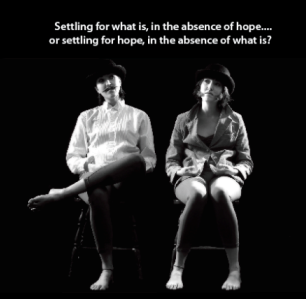
BloodgoodGodot.png

Julianna Bloodgood as (L to R) Vladimir and Estragon in "Waiting for Godot"


“Waiting for the End of Time,” CONCERT:NOVA’s December 19 program at Christ Church Cathedral in Cincinnati, was an exquisite event. Rarely have so many things come together to form a satisfying whole, in this case music, drama and visual art presented in an environment singularly appropriate to it.

In addition, it marked, to my knowledge, the only observation of the centennial of French composer Olivier Messiaen to take place in Cincinnati this year.

Born 100 years ago December 10, Messiaen wrote his famous “Quartet for the End of Time” while interned in a German prisoner of war camp during World War II. It was premiered at Stalag VIII-A in Görlitz, Germany (now Poland) for an audience of fellow prisoners and guards in January, 1941. Informed by the composer’s deep religious faith, it takes the side of hope in a dismal, hope-less world.

CONCERT:NOVA members Ixi Chen (clarinet), Tatiana Berman (violin), Theodore Nelson (cello) and Julie Spangler (piano) performed Messiaen's Quartet along with spoken excerpts from Irish writer/playwright Samuel Beckett’s “Waiting for Godot” delivered with presence and conviction by Cincinnati actress Julianna Bloodgood. Beckett’s 20th-century classic takes a despairing view of the world, i.e. there is really nothing to hope for.

The powerful visual element was created by photographer/visual artist Trinidad Mac-Auliffe who compiled images of Bloodgood as each of the four main characters in the play to be projected simultaneously with the music. The black-and-white photos (taken during a 12-hour photo shoot, said Bloodgood) presented the actress in various combinations of clothing, facial hair and headgear.

Written in 1948-49 (originally in French), “Waiting for Godot” is a two-act play about two friends (Vladimir and Estragon) waiting beside a tree for someone named Godot. They do not actually know Godot, but they have been told to meet him and somehow feel that it is important. They wait for two acts, during which a pair named Pozzo and Lucky (master and slave) drop by. At the end of both acts, a mysterious Boy tells them Godot has been delayed but will come the next day. They pass the time aimlessly with chat and mundane matters, even contemplating suicide as a release from boredom.

By contrast, Messiaen’s Quartet was suggested by passages from chapter 10 of the Book of Revelation where an angel proclaims “that there should be time no longer” and that “the mystery of God should be finished.” The eight movements are correlated to the biblical text. Four are for the full quartet, one for solo clarinet, one each for cello and piano and violin and piano, one for a trio of violin, cello and clarinet. The whole lasts about 48 minutes. Bloodgood and members of C:N dressed in tones of cream and white. The spacious interior of the church, with its warm-wood fittings, stained glass windows, massive cross hanging over the nave, seasonal evergreens and poinsettias, was a thoroughly fitting and gracious venue for the concert.

The opening “Liturgy of Crystal” contrasted the pre-dawn awakening of birds (clarinet and violin against a shimmering background) with images of Estragon trying to remove his boots (“Together again,” comments Vladimir). Vladimir peered into his hat (his thoughts) and Estragon fell asleep during “Vocalise for the Angel who announces the End of Time,” where the quartet gave powerful imagery to the biblical vision of the seventh angel who “set his right foot upon the sea and his left foot on the earth.”

Clarinetist Ixi Chen created incredible sonorities in “Abyss of the Birds,” a moving, eight-minute meditation on (according to Messiaen’s notes for the work) “the sadness” and “weariness” of Time. A feat for the clarinetist, it calls for extremes of pitch and dynamics. Meanwhile on the video screen, Pozzo and Lucky appeared, Pozzo ate chicken and philosophized with Vladimir.

Cellist Nelson soared in “Praise to the Eternity of Jesus,” one of two movements exalting the attributes of Christ. Meanwhile, Bloodgood gave voice to a trivial spat between the waiting pair, who make up and conclude “What do we do now that we are happy? Wait for Godot.” The tree (a symbol of the Cross?) has sprouted leaves in act II of the play, from which Bloodgood interpolated further abstracts to “Dance of Fury, for the Seven Trumpets,” a rhythmically complex and strenuous movement where the quartet emulated apocalyptic sounds.

In the penultimate “Tangle of rainbows, for the Angel who announces the end of time,” music from the second movement recurred, as did Pozzo and Lucky on the video screen. Pozzo is now blind, subservient to Lucky and in need of help. Vladimir wrestles with aiding him but concludes “What are we doing here . . . waiting for Godot.” The C:N musicians crafted vivid colors and effects here, from the rich, emotive sound of the instruments in unison to steely arpeggios by violinist Berman and passionate trills by all (as Pozzo and Lucky exited).

It was Berman’s moment in the final movement, “Praise to the Immortality of Jesus,” and she rose to it splendidly. The music paints the soul’s ascent to heaven (compare the composer’s “L’Ascension”), an eight-minute exercise that finishes in stratospheric heights on the violin. Berman has the ability to play with the deepest intensity while avoiding any hint of shrillness or diminishing the beauty of her sound, which blended with the beauty of the cathedral itself.

Bloodgood drew the musicians into the play after the music ended by giving them Vladimir and Estragon’s final words after being told that Godot is again not coming, but will come the day after: Vladimir: “Shall we go?” Estragon: “Yes, let’s go,” followed by lights out and no movement at all.

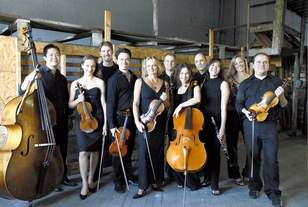
concertnovaenq.jpg
CONCERT:NOVA L to R: Owen Lee, Tatiana Berman, Patrick Schleker, Mauricio Aguiar, Heidi Yenney, Cristian Ganicenco, Christine Coletta, Randolph Bowman, Ixi Chen, Elizabeth Freimuth, Eric Bates

CONCERT:NOVA is a chamber group drawn mostly from the Cincinnati Symphony and Chamber Orchestras. Now in its second season, C:N continues its series of collaborative, multi-media events with “Concert in the Dark” February 2 at the Contemporary Arts Center, a concert that C:N says will “challenge the listener’s experience with live performance by turning off the lights completely.” “Demystifying Arnold Schoenberg” follows in March, “Beyond Ballet, a program of “music in motion” in May (John Adams, Arvo Pärt, Samuel Barber) and “Mirror in the Mirror” in June, featuring live interactive video and works by J.S. Bach, Ollie Mustonen, Michael Fiday and others.

For information, visit http://www.concertnova.com/

Friday, 19 December 2008


Tuesday, December 16, 2008
Onstage: concert:nova
By Matt Morris

Concert:nova best describes its cross-disciplinary mash-ups of music, theatre and art as “conversations.” For the upcoming Friday night performance, bits of Samuel Beckett’s Waiting for Godot will be performed by Julianna Bloodgood against video work by Trinidad Mac-Auliffe and a revival of Oliver Messaien’s chamber piece Quartet for the End of Time. These works, when at play with one another, contrast situations of finding meaning, especially in adverse circumstances (Messaien created his music while a prisoner during WWII). But, in places, that meaning will no doubt be contradicted by the strains of Absurdism that run through Beckett's work. Best of all, c:n will be performing this work in Christ Church Cathedral (318 E. Fourth St. Downtown), a poignant setting for exploring such issues, including the wait for “Godot” himself. 8 p.m. performance with a 9:30 p.m. reception. $20; $10 students and ETA members.