Wednesday, 18 November 2009

Concert:nova - Playing with Light!

December 7, 2009
7.30pm
538 Reading Rd
Cincinnati 45202

Wednesday, 7 October 2009

http://www.musicincincinnati.com/site/reviews/concert_nova_Keeps_the_Latin_Rolling.html

concert:nova Keeps the Latin Rolling

Mary Ellyn Hutton
Posted: Oct 5, 2009 - 12:45:01 AM in reviews

concertnova_photo.jpg
musicians of concert:nova
concert:nova tangoed into the night at the Contemporary Arts Center Sunday (Oct. 4), carrying on the Latin beat struck by the Cincinnati Symphony Orchestra Friday and Saturday at Music Hall.
There was a bandeonist, American-born Ben Bogart from Buenos Aires, also soprano Ellen Wieser, pianist Audrey Causilla and guitarist Richard Goering.
concert:nova musicians included violinists Mauricio Aguiar and Tatiana Berman, violist Heidi Yenney, cellist Theodore Nelson, bassist Owen Lee, flutist Randolph Bowman and clarinetist Ixi Chen.
Providing the something extra that is part of all c:n concerts were dancers from Tango del Barrio, Chuck Reder, Debby Vigna, Julie Barnett, Nuria Lopez-Ortega, Jake Moscovitch, Ella Moscovitch and Tony Seta.
(Tango del Barrio is a local Argentine social club that offers classes in Argentine tango and sponsors regular tango dances. Visit them at www.TangoDelBarrio.com)
cn_flyer_1.jpg
Program-wise, it was like tapas buffet, with 15 selections, from Manuel de Falla to Ljova, ranging from Argentina, Uruguay, Brazil and Spain.
CSO principal oboist and c:n member Dwight Parry, rose in his lapel, emceed the event and provided engaging commentary (hear him play on other c:n concerts this season).
First on the menu was actually a bagel, i.e. "Bagel on the Malecon" by New Yorker Lev Zhurbin, also known as Ljova, who tapped Cuban son to conjure eating a bagel on Havana's boardwalk. Originally for "vjolas" (violist Zhurbin's spelling of violas), it was performed spiritedly by Aguiar, Yenney and Nelson.
Violinist Berman, smartly attired in a mottled red dress with spike-heeled red shoes, joined them in the Allegro violento e agitato (Parry: "very angry") of Ginastera's 1948 String Quartet No. 1. Aguiar drew a gutsy sound from his violin, playing high on its lowest string (G) against a steady rhythm by the other members of the quartet. Canadian-born Wieser wore a red rose in her hair and displayed a lovely lyric voice in two of the "Cuatro Madrigales Amatorios" ("Four Love Songs") by Joaquin Rodrigo. They were a contrasting pair. The first, "Vos me matasteis" (You've killed me") was about painful love. The second was a complaint, "De donde venis, amore?" ("Where have you been, love?") sung with foot-tapping, arms-crossed consternation.
Goering and Nelson introduced both a composer and his work with the first two movements from the Sonata for Guitar and Cello by Brazilian Radames Gnatalli (1906-88). Composed in 1969, it was one of the finds on the program, colorful and melodic, with irregular rhythms and the cello sometimes strummed like a second guitar.
Ginastera's "Impresiones de la Puna" refers to the land of the Incas, said Parry and it, too, was very rewarding. Scored for flute (Bowman) and string quartet (Berman, Aguiar, Yenney and Nelson), it has three movements. The mysterious "Quena" began with the flute in its dark, lowest register. "Cancion" contrasted lush, sweetly melodic sections with more agitated ones. Randolph shone brightly in the alternately animated and relaxed "Danza."
Soprano Wieser and a string quintet, including Lee on double bass performed the Aria (Cantilena) from Villa Lobos' "Bachianas Brasilieras" No. 5. Scored lavishly for eight cellos in the original, it nevertheless sounded full and rich, with violist Yenney offering a soulful melody at one point. Wieser sang with great tonal beauty, and her hummed reprise cast a bewitching spell.
Following intermission came the lighter half of the program, including eight tango selections. Four of them were accompanied by Tango del Barrio's skilled dancers.
It opened, however, with four of Falla's "Siete canciones populares espanoles" (Seven Popular Spanish Songs) performed by Bowman and Causilla. These are exquisitely evocative works. You could almost feel the teardrops falling in "Asturiana" about a pine tree that "weeps to see me weeping." "Jota" anticipates the jota from Falla's later "Three-Cornered Hat," while "Nana" was a gentle, Spanish-inflected lullaby. The "pain in the heart" in "Polo" was manifest by pounding piano and strident flute, capped by Bowman's final, high-pitched exclamation.
Another highlight was "Nightclub 1960" for violin and guitar. It is the third installment in Piazzolla's "Histoire du Tango," a set of four movements outlining the evolution of the tango, from its seamy origins in turn-of-the-century Buenos Aires bordellos to its present state as exalted by classical composers (like Piazzolla). Rose in the scroll of her violin, Berman gave it a richly colored, beautifully shaped rendition -- from brightly focused to feathery to sassy -- kindled by expressive vibrato and piquant effects like scratching behind the bridge with her bow.
There was more Piazzolla, including "Escualo," for violin, bandoneon, double bass and piano, where bandoneonista Bogart used the instrument both percussively and as a melodic double for the violin. The heat of the tango dissipated in a downward fizzle by Aguiar at the end.
The dancers took the floor in Eduardo Arolas' "Comme il faut," an upbeat tango, followed by Piazzolla's mournful "Oblivion" for instruments alone.
Jerzy Peterburshsky's dramatic "El sol sueno," where even the double bass gets the melody, featured Aguiar, clarinetist Chen, Nelson, Bogart, Lee and Causilla. Uruguayan Rosita Melo's "Desde el Alma" ("From the Soul") was a cheerful waltz tango, with violins in thirds and dancers again sweeping the floor in front of the stage. It was fun to see the women improvise kicks and leg wraps in response to the men's lead (in tango the man always leads) and each couple executing different patterns.
(Yenney, who wore a very cool pair of black tango shoes with red straps, looked as if she should have taken a turn with them.)
Piazzolla's "Milonga del Angel" for violin (Aguiar), guitar, bandoneon, double bass and piano, had a jazz flavor tinged with blues, and the dancers returned for the finale, Manuel Carretero's "Ella es asi" ("She's like that") where all ten musicians gave the concert a bright, energetic finish.
The concert was followed by an after-party at Nada restaurant across the street on Walnut.
The next concert:nova performance will be in December (date to be announced) at the c:n garden, 538 Reading Rd. The program, "Playing with Light" will feature video artist Charles Woodman and visual artist Tony Luensman, who will provide visual commentary on music by George Crumb, Arvo Pärt, Andre Jolivet and Toru Takemitsu.
In February there will be a "Mahler Project" in celebration of the composer's 150th anniversary, with chamber ensemble versions of his "Das Lied von der Erde" and Fourth Symphony.
April will bring "Four Seasons" by Vivaldi, Piazzolla and American composer Aaron Jay Kernis' "Culinary Four Seasons."
In May, c:n will welcome choreographer Heather Britt, dancers from Cincinnati Ballet and a team of local composers led by Joel Hoffman, who will "interpret" Saint-Saens'"Carnival of the Animals."
The c:n season concludes in June with "Mirror in the Mirror," a celebration of fugue and counterpoint, with a presentation of video artist Trinidad MacAuliffe's visual interplay of live and pre-recorded c:n musicians.
All dates will be announced.
For information, visit www.concertnova.com

The Cincinnati EnquirerA happening at the CAC

Posted by jgelfandOctober 5th, 2009, 3:24 pm
Concert:Nova

Concert:Nova

The night after the Cincinnati Symphony’s fantastico Latin evening, the tango continued with a group of musicians of the CSO and Chamber Orchestra in an improbable place — the lobby of Cincinnati’s Contemporary Arts Center.

Eight musicians of Concert:Nova – Cincinnati’s most innovative music ensemble — presented a wonderful evening of Latin gems, from the familiar (Villa-Lobos’ Bachianas Brasilieras No. 5) to Ginasteras’ “Impresiones de la Puna,” a spectacular find.

The group — violinists Mauricio Aguiar and Tatiana Berman, flutist Randy Bowman, clarinetist Ixi Chen, bassist Owen Lee, cellist Ted Nelson, violist Heidi Yenney and emcee Dwight Parry (oboist) — collaborated in sensuous tangos and wonderful Latin discoveries with guitarist Richard Goering, soprano Ellen Wieser and pianist Audrey Causilla. They even flew in a guy who plays bandoneon from Argentina — Benjamin Bogart, an American ex-patriot and “tango fanatic.” And yes, there were dancers from a local Argentine tango social club, Tango del Barrio.

Afterwards, the party continued at Nada, across the street. More than 80 music lovers turned out, even though the event only seemed to be publicized via e-mail and Facebook.

Is this kind of intimate show the future of classical music?

P.S. I’m pleased to report that Zaha Hadid’s architecture is also acoustically friendly for musical performance. Wonder if she had acoustics in mind when she designed it?

Part of Concert:Nova’s uniqueness is its theme under artistic director Ixi Chen of groundbreaking performance art in unexpected places. They have even performed at Children’s Hospital… The next concert is in December at a basement known as CN Garden on Reading Road… with video artist Charles Woodman, visual artist Tony Luensman, and the music of George Crumb, Arvo Part, Andre Jolivet and Toru Takemitsu…

Posted in: CSO, Local Music Groups, Updates, Visual art |
Tags: , , , , ,


Monday, 6 April 2009

http://www.musicincincinnati.com/site/reviews/Schoenberg_with_a_Heart.html

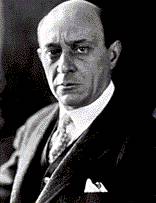
Schoenberg with a Heart

Mary Ellyn Hutton
Posted: Apr 6, 2009 - 2:29:25 PM in 
reviews 

schonberg_1.jpg
Arnold Schoenberg
The most profound words heard Sunday evening at the Concert:Nova presentation "Demystifying Schoenberg" -- other than his music itself -- were these, uttered by actor Michael Burnham:

   "No one wanted to be, someone had to be, so I let it be me."

   As Burnham explained -- in an astonishing performance as the composer who revolutionized music in the 20th century -- this is how Schoenberg answered an officer in the Austrian army in World War I who asked him if he were "this notorious Schoenberg."

   His reputation as the composer who had "emancipated dissonance" had preceded him.

   The concert, held on the "garden" level ground floor of the Metaphor building on Reading Road in Over-the-Rhine, drew a capacity audience (well over 100 with extra chairs brought in).  This is something of a feat for the still fear-inducing composer, especially on a rainy night with tornado warnings in effect.

   Central to it was Burnham, whose German accent, wire-rimmed glasses poised on the end of his nose, and wry and often impassioned delivery imparted an unforgettable humanity to the composer.  His lines were drawn from Schoenberg's writings and comments, tailored to the music on the concert.  It was a tour de force that simply must become a permanent part of C:N's repertoire.

   So why did somebody have to be the "notorious" Schoenberg?  

   When the Viennese composer (born 1874) came along, traditional harmony --i.e.  key-centered music that sounds "good" to the ears -- had been stretched to the breaking point by composers like Mahler, Richard Strauss, Debussy, Scriabin, etc.

   Now what?  That was the question.  Schoenberg did not shrink from seeking an answer. Free atonality (he preferred to call it "pantonality") was OK as far as it went, but it needed to have some kind of structure to build on.  After much consideration (and vitriol for freeing "dissonance"), he invented one with what he defined as the "method of composing with 12 tones related only with one another."

  So-called "12-tone" or serial music was born and with it, the Second Viennese School (Schoenberg and his pupils Anton Webern and Alban Berg, as successors to Haydn, Mozart and Beethoven, or the First Viennese School).

   The music on Sunday's program, performed by members of the chamber ensemble Concert:Nova with soprano Meng-Chun Lin, pianist/Schoenberg scholar Steven Cahn and conductor Kenneth Lam, spanned Schoenberg's stylistic development. 

  There were excerpts from his light-hearted, completely tonal Cabaret Songs (1901) to his Serenade, Op. 24 (1924), where the possibilities of 12-tone composition bloom artistically (not just intellectually).

   In between were selections from his Op, 23 Piano Pieces (1920-21), "Book of the Hanging Gardens" (1910) and expressionistic "Pierrot Lunaire" (1912).  In "Pierrot," now one of his most often performed works, the "reciter" (singer) employs Sprechstimme or "speech-voice," where the voice falls away from sung pitches in speech-like fashion.         

   The concert ended with the 1909 Chamber Symphony No. 1, where Schoenberg's identity as an arch-romantic in the Strauss/Mahler tradition speaks loud and clear.

   Meng-Chun Lin, a splendid soprano currently pursuing her doctor of musical arts degree at the University of Cincinnati College-Conservatory of Music, inhabited everything she sang, beginning with three of the Cabaret Songs, "Galathea," "Mahnung" ("Warning") and Aria from "The Mirror of Arcadia."  All were delivered in a full, rich voice shaded with expression and enhanced with delightful stage acting. Cahn's accompaniment set the theatrical mood vividly.

   Lin communicated stark seriousness, her gaze fixed forward, in numbers three, four and ten from "Book of the Hanging Gardens," a set of despairing love poetry for voice and piano completed during a marital crisis (Schoenberg's first wife Mathilde eloped briefly with a painter).

   She handled her Sprechstimme to telling effect in three excerpts from "Pierrot" --"Mondestrunken" ("Moondrunk"), "Valse de Chopin" (a horrific waltz) and "O Alter Duft" ("O Ancient Fragrance"), conveying well its sickly mix of madness and calculation.  She was joined here by C:N members Heidi Yenney (violin/viola), Randolph Bowman (flute/piccolo), Ronald Aufmann (clarinet/bass clarinet) and Marcus Kuchle (piano), all keenly in tune with the bizarre melodrama.

   Cahn, professor of theory at CCM who wrote his doctoral dissertation on Schoenberg, exemplified one of the composer's famous remarks in two of the Five Piano Pieces, Op. 23, "Sehr langsam" and "Sehr rasch"  ("Very slowly" and "Very quickly")These aphoristic works -- the two pieces are about three-minutes' total -- were among his first experiments with 12-tone writing and, as such, posed a challenge for its first listeners, including Berg.  Said Schoenberg in effect: "My music is not bad, just performed badly."  Cahn, who obviously "gets" this music, performed them commitedly and extremely well. 

   Following intermission -- a delicious few moments with complimentary wine and snacks for the crowd -- the concert concluded with two of the composer's works for larger ensemble. 

   Serenade, Op. 24, featured violinist Tatiana Bermanviolist Yenney, cellist Christina Coletta,clarinetist Jonathan Gunn, bass clarinetist Aufmann, guitarist Richard Goering and Brian Deyo on mandolin.  Lam conducted.  The Serenade is, as Cahn put it, "one beautiful melody after another," and, though composed using Schoenberg's 12-tone method, it is.  The contrast of instrumental colors contributes to the ear-pleasing effect, with guitar and mandolin against the bowed/plucked strings and woodwind timbres.  Heard were "Lied" (a song without words) and"Tantzscene" ("Dance scene").  Berman's distinctively sweet tone illuminated "Lied," while"Tanzscene" manifested shape, regular rhythms and melody, including a charming clarinet solo with accompaniment.  What more could anyone want?

   If there were any doubts about the emotion in Schoenberg's music -- an object of the program was to dispel that notion, said artistic director/C:N clarinetist Ixi Chen -- they were dispelled with the concluding Chamber Symphony No. 1, led with considerable energy and insight by Lam.

   The ensemble comprised violinists Mauricio Aguiar and Berman, violist Yenney, cellist Coletta, double bassist Owen Lee, flutist Bowman, clarinetists Jonathan Gunn, Chen and Aufmann, oboists Dwight Parry and Lon Bussell, bassoonists Hugh Michie and Jennifer Monroe and French hornists Elizabeth Freimuth and Lisa Conway.  One would have thought an undiscovered work by Richard Strauss had just come to light, so filled with passion (and downright Straussian heroism) the music was.

    The 20-minute work falls into several distinct sections, including a lovely slow "movement" introduced by double bass harmonics.  At one point, there was a clue of the direction the composer was about to take with harmony in an upward succession of fourths.  Tonal harmony is built on triads (thirds).

   Freimuth and Conway soared at the end in a full-bodied conclusion that drew whoops from the crowd.

   Look for C:N, which has performed in many different kinds of venues, including clubs, bars, restaurants and museums, to appear in local jazz clubs in the near future.  Spotted in the crowd Sunday were prominent members of Cincinnati's jazz community. 

Cincinnati.Com » Music

Last Updated: 7:43 pm | Monday, April 6, 2009

Concert:Nova demystifies Schoenberg

Concert review

By Janelle Gelfand • jgelfand@enquirer.com • April 6, 2009


The mere mention of Arnold Schoenberg, the father of 12-tone music, makes some concertgoers want to flee. But on Sunday, Concert:Nova, a groundbreaking ensemble of musicians, set the music of Schoenberg in a striking new light. 

Concert:Nova’s program, “Demystifying Schoenberg,” mounted in a basement space in Pendleton which the group calls “The Garden,” was an eye-opening fusion of concert and theater. Concert:Nova, consisting mainly of Cincinnati Symphony Orchestra and Cincinnati Chamber Orchestra players, aims to present a “multi-sensory perspective,” mounting performances in various spaces around the city. This space, with its exposed-brick walls and pipes in the ceiling (which provided ambient water noise) became part of the theatrical experience. 

Actor Michael Burnham, drama professor at the University of Cincinnati’s College-Conservatory of Music, was superb as the composer, who looked back on his life between musical selections. Speaking in a German accent with a touch of Yiddish, he spoke from an engaging script culled from Schoenberg’s own writings and speeches (by CCM professor Steven Cahn, who also performed on piano). The actor as composer alternately recalled his premieres, raged against critics and spoke philosophically about his life and his work.

It was an ideal way to humanize this oft-maligned composer, and proved to be an evening of discovery for many in the standing-room-only audience. The program included Schoenberg’s lyrical, post-romantic “Kammersymphonie” No. 1, as well as “Pierrot Lunaire,” one of his most haunting works on the road to abandoning tonality. 

The first half featured music with voice. Soprano Meng Chun Lin, a doctoral student at CCM and pianist Cahn, opened with three “Cabaret Songs,” written in 1901 in Berlin. It was a rare lighter side of Schoenberg, and Lin communicated the songs with warmth and humor. 

Three songs from “Book of the Hanging Gardens” suited her voice wonderfully. The last, “The beautiful flowerbed,” was movingly phrased, and the pianist tackled its rich chords with weight. Cahn also found emotional depth in the short Op. 23 Piano Pieces.

Three selections from “Pierrot Lunaire,” expressionist song settings of poems by Albert Giraud, was another highlight. Lin soared through the melodramatic “Sprechstimme,” and projected its sense of drama. The atmosphere of the small ensemble, conducted by Kenneth Lam, was magnificent, and pianist Marcus Kuchle contributed a magical touch in “Drunk with Moonlight.”

After intermission, Lam, who is assistant conductor of the CSO, led larger ensembles in the “Serenade” Op. 24 and Schoenberg’s Chamber Symphony No. 1 of 1906. It was a treat to hear the Chamber Symphony for 15 instruments, which looks back to romanticism as much as ahead to the composer’s new style. The musicians gave it an impassioned reading, and Lam was a confident leader through its rapid changes of mood and meter.

One caveat: The intimate room was not always ideal for hearing all of Burnham’s lines or seeing players, something the founders may want to address in future programs.

Visit www.concertnova.com for news about future performances. What did you think? Review this concert at Cincinnati.Com/Entertainment.

Sunday, 22 March 2009


Was he the Doctor Faustus of 20th century music? The nice old man who lived across the street from Shirley Temple?  Both? You decide when concert:nova presents The Music That Changed Music on April 5, 2009 7PM at the c:n Garden, 538 Reading Road in downtown Cincinnati.

DEMYSTIFYING SCHOENBERG: The Music that Changed Music
featuring
Michael Burnham, as Schoenberg
Meng Chun Lin, Soprano
Steven Cahn, Schoenberg Historian, Piano
Kenneth Lam, Conductor
with concert:nova performing selections from

 Book of the Hanging Gardens
 Cabaret Songs
 Piano Pieces, Op. 23
 Pierrot Lunaire
 Serenade, Op. 24
 Chamber Symphony No. 1

As complex as the century he struggled to influence and reflect, composer Arnold Schoenberg comes alive in a theatrical collaboration between acclaimed actor Michael Burnham and Schoenberg historian Dr. Steven Cahn. Together with c:n, they have scripted a compelling multi-disciplinary work that interweaves the man and his music. With guest artists Meng Chun Lin, soprano and conductor Kenneth Lam, concert:nova musicians will perform selections that trace the arc of Schoenberg’s evolution.
The program illuminates the emotional qualities of both Schoenberg and his music, not just the legendary intellectual force of his thinking or his innovative techniques. This thought-provoking exploration of one of the most unforgettable composers of the 20th century looks into Schoenberg's musical headspace, provides a sense of his world and his personality, and a side of the music many people miss.

As Schoenberg said, "I'm somewhat sad that people talk so much about technical methods when it comes to my music. All music, all human work, has a skeleton, a circulatory and nervous system. I wish that my music should be considered as an honest and intelligent person who is saying something he feels deeply, and which is of significance to us all."


Tickets are $20, $10 for students and seniors, at the door or click here to purchase tickets in advance. 

The c:n garden is in downtown Cincinnati at 538 Reading Road between Pendleton and Liberty in the Metaphor Building.
 
Park on Reading Road, or in the self-pay lot across the street.
 
Enjoy post concert wine, other light refreshment and conversation with the musicians.
 
About concert:nova. 
 
Founded in 2007, concert:nova is a chamber ensemble that creates a modern, new concert experience. Drawn primarily from members of the Cincinnati Symphony and Cincinnati Chamber Orchestra, the ensemble demonstrates the importance of combining classical and modern chamber music with dance, theater, photography, film, and the spoken word to create an experience that is vital and relevant to contemporary audiences.
 
concert:nova brings its unique sound and vision to the Cincinnati’s landscape of galleries, coffee houses, museums and found spaces. The ensemble creates the engaging and up-close exchange between musicians and audiences for which chamber music was originally created. For further information, visit www.concertnova.com, call (513) 321-5073 or contact c:n at info@concertnova.com  

Wednesday, 4 February 2009

February 2, 2008

Polusmiak, Berman-Järvi Share "New Beginnings" at NKU

Mary Ellyn Hutton


polusmiak_2.jpgSergei PolusmiakTatiana-0158_1.jpgTatiana Berman-Jarvi

What do you get when you put Russian and Ukrainian musicians together onstage?  Energy problems? (Analogy to the clash between the two countries over energy policy shamelessly intended.)
Quite the contrary, there was musical energy to spare Friday evening in Northern Kentucky University’s Greaves Concert Hall.
The occasion was NKU’s “New Beginnings,” a chamber music series featuring distinguished artist-in-residence Sergei Polusmiak and guests.  Polusmiak, a native of Kharkiv, Ukraine, welcomed Russian born violinist Tatiana Berman-Järvi -- neither was fazed by the Arctic weather outside -- for a program aptly described as a “mixture of French beauty and Russian power.”
“French beauty” referred to three Gallic works, Olivier Messiaen’s 1932 Theme and Variations for Violin and Piano, Sonata for Violin and Piano by Debussy and Sonata in A Major for Violin and Piano by Cesar Franck. 
 The “Russian power” denoted Rachmaninoff’s muscular Piano Sonata No. 2 in B-flat Minor, Op. 36, as well as power of a subtler sort, Tchaikovsky’s lovely “Meditation,” Op. 42, No. 1, for Violin and Piano.
 Polusmiak, “Honored Artist of Ukraine,” who immigrated to the U.S. in 1998, is a cogent example of the great tradition of piano playing exemplified by Vladimir Horowitz and his sister Regina, with whom Polusmiak studied in Ukraine.
   Berman-Järvi has been putting audiences on notice since coming to Cincinnati in 2004 (she is married to Cincinnati Symphony music director Paavo Järvi) that she is an exceptional artist who concedes nothing to today’s top-ranking fiddlers.  A product of the Yehudi Menuhin School in England and London's Royal College of Music, she displays her violinistic pedigree in everything she does. 
   She opened with the Messiaen, a work of mystical embodiment in the manner of his well known “Quartet for the End of Time” (performed by Berman-Järvi and members of the chamber group Concert:Nova at Cincinnati’s Christ Church Cathedral in December).
    Berman-Järvi possesses a distinctive tone – ineffably sweet, with a rapid, precise vibrato that she applies with exquisite musicianship.  Even the most intense moments never veer into excess or self-indulgence, but serve the music. (Three-quarters of a violinist’s tone, is a product of the player, not the instrument --  Berman-Järvi plays on an 1840 violin by British violin maker William E. Hill.)  
   These gifts, allied to technique in spades, served her and the music well in the Messiaen, where she soared above pealing chords by Polusmiak in the final variation, in the Tchaikovsky “Meditation,” which she capped with a silvery, stratospheric, high D, and, indeed, throughout the concert.
   Polusmiak can be a volcanic pianist and he was in the Rachmaninoff Sonata No. 2, a work which lends itself to such playing.  In three movements, the last two played without pause, the music is often turbulent, even angry, with volleys of notes pouring from the keyboard.  At such moments, Polusmiak seemed to have all 88 keys in his hands, helpless to do anything but his bidding, aided by effective, liberal pedaling. 
   The second movement was gentle and quasi-rhapsodic, the final movement tumultuous in the extreme, drawing an instant standing ovation from the crowd.  Obviously immersed in his playing and the excitement of the moment, Polusmiak waved from the wings rather than returning to center stage to acknowledge the applause (perhaps needing to retreat for de-compression).
   The two violin/piano sonatas followed after intermission.  Debussy’s Sonata, composed in the shadow of World War II, had a sometimes wistful, fluid elegance, from the Berman-Järvi's soft, opening statement to the playful second movement and the brisk finale.  
   Franck’s A Major Sonata made a sterling finish to the recital (Franck composed it for Belgian violinist Eugene Ysaye, music director of the CSO from 1918-22).  Collaboration by the two artists was superb here, Berman-Järvi applying her bow expertly and judiciously for a big, lustrous sound which she could plateau easily to match Polusmiak’s.  Twice they shaped the Sonata’s cyclical opening theme to a blossoming climax.
   Beginning with ominous rumblings in the piano, the second movement grew impetuous and wonderfully expressive.  The violin/piano dialogue in the third movement was touching, powerful and evenly matched, setting a serious mood that melted charmingly in the finale.  Here they took off after one another in high good humor (it is structured imitatively), working up to an exuberant ending and earning another standing ovation.